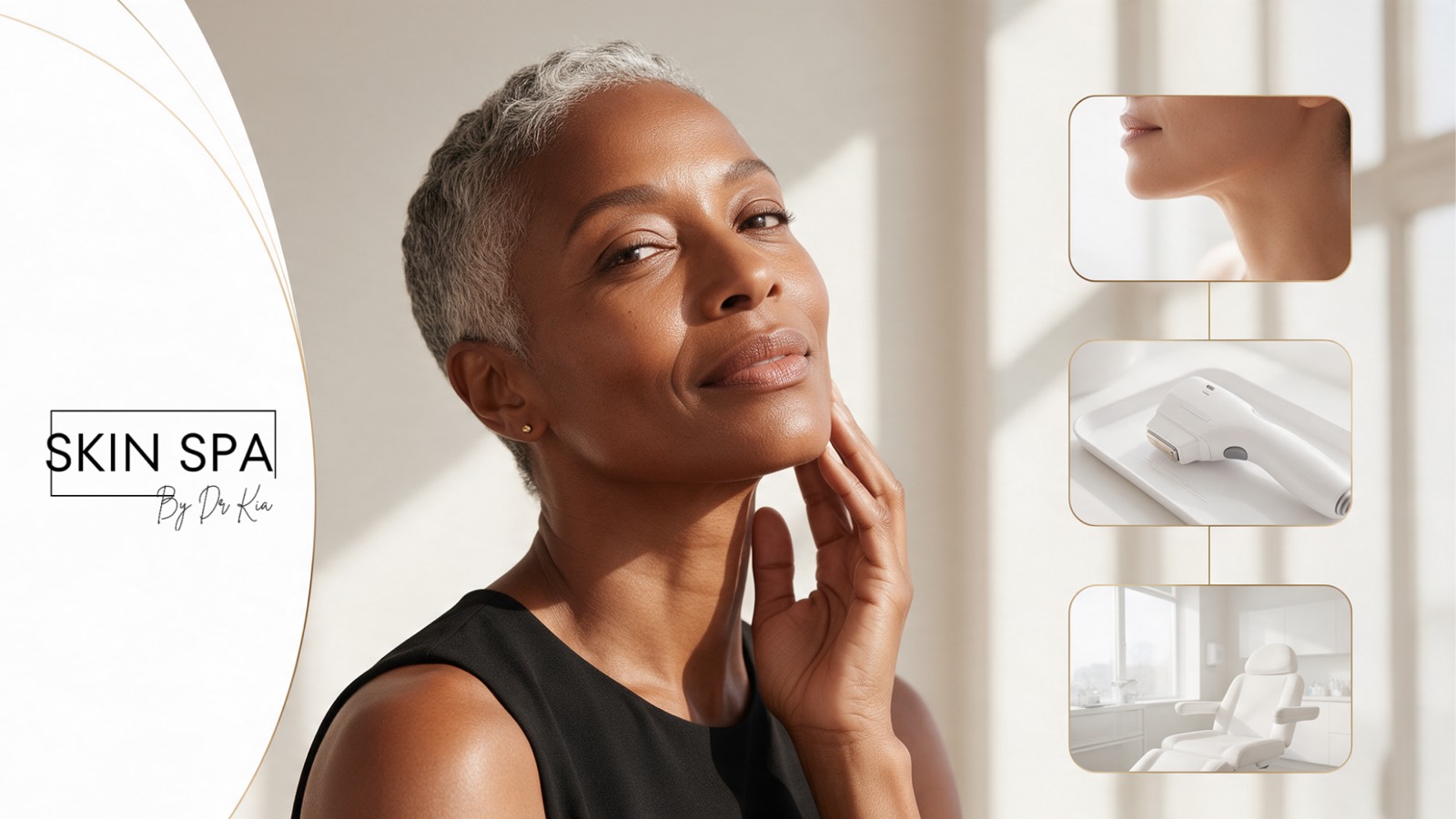
Skin Tightening in Los Angeles: XERF, Morpheus8, Ultherapy, and FORMA Compared
Skin tightening in Los Angeles works best when the technology matches your degree of laxity. XERF and FORMA use radiofrequency without needles, Morpheus8 pairs radiofrequency with microneedling, and Ultherapy uses focused ultrasound. Each stimulates collagen, and they differ in downtime, sessions, and how deep the energy travels.
This guide compares the four options offered at Skin Spa by Dr. Kia in Brentwood, summarizes what published research shows for each technology, and explains how to choose. For a closer look at the practice’s newest option, see the guide to XERF skin tightening in Los Angeles.
What Is Non-Surgical Skin Tightening?
Collagen and elastin decline with age, so the cheeks, jawline, and neck begin to soften. Non-surgical skin tightening uses controlled heat or focused energy to contract existing collagen and trigger new collagen over time. These treatments suit mild to moderate laxity. Skin Spa by Dr. Kia is direct that XERF cannot replace a facelift, and more significant laxity may call for a surgical or combination approach. You can browse the practice’s full set of skin tightening treatments.
The common thread among all four options is that they work below the surface. Instead of changing the top layer of skin, they deliver energy to the deeper tissue where collagen lives, and the body responds with a slow, steady rebuild. That is why results arrive over weeks and months and not overnight.
How Do XERF, Morpheus8, Ultherapy, and FORMA Work?
XERF
XERF is a needle-free monopolar radiofrequency system that delivers 6.78 MHz and 2 MHz energy in a single pulse, with built-in cooling, to heat the deeper layers where collagen support declines. Dr. Kia personally performs every XERF skin tightening treatment. Sessions run about an hour, and results build over weeks and months.
Morpheus8
Morpheus8 combines microneedling with radiofrequency in one treatment. The practice describes microneedles that reach about 4 millimeters, with an additional 1 millimeter thermal profile. Controlled heat breaks down some existing collagen, and stronger collagen regenerates over the following weeks.
Ultherapy
Ultherapy delivers microfocused ultrasound beneath the surface, guided by ultrasound imaging. The practice describes lift that builds over about three months and suggests it for people with a decent amount of skin elasticity who want a moderate lift of the brow, lower face, neck, or upper chest.
FORMA
FORMA uses radiofrequency energy to gradually heat deep tissue, and the body responds by forming new collagen. The practice describes the treatment as painless with no downtime, delivered as a series of weekly sessions. It can treat the face and body, including the neck, jowls, arms, thighs, and abdomen.
How Do the Four Treatments Compare?
The four options differ in how they deliver energy, how much recovery they involve, and how many visits they take.
XERF uses dual-frequency monopolar radiofrequency with no needles. Downtime is minimal, with temporary redness, warmth, or slight swelling, and most patients return to normal activities the same day. One session helps some patients, others do best with a short series, and a session takes about an hour. It is best for early jowling, lower face and neck laxity, and jawline definition.
Morpheus8 uses fractional radiofrequency with microneedling. Downtime is about 1 to 3 days, with micro-lesions for a few days and slight redness for up to about a week. One to three sessions usually produce full results. It suits the face, neck, and abdomen, including wrinkles, acne scars, and stretch marks.
Ultherapy uses microfocused ultrasound with no needles. There is no downtime, and redness resolves within hours. A session takes 60 to 90 minutes, and results build over about three months. It suits the brow, lower face, neck, and upper chest in people with decent elasticity.
FORMA uses radiofrequency with no needles and, per the practice, no downtime. It is delivered as a series of weekly sessions, and the team helps determine the right plan for each patient. It treats the face, neck, jowls, arms, thighs, and abdomen.
What Happens During a Skin Tightening Visit?
Every plan begins with a consultation. For XERF, Dr. Kia evaluates your anatomy, skin quality, and goals to decide whether it fits. During treatment, patients typically feel repeated warmth with intermittent bursts of heat, which the practice describes as manageable, and the built-in cooling adds comfort.
For Ultherapy, the skin is cleaned and the treatment area identified. Ultrasound gel and a smooth applicator go on the skin, and the system’s imaging lets Dr. Kia see deep into the skin to place energy precisely. Patients feel the energy being delivered, and comfort varies by person, so over-the-counter medication may be prescribed for any discomfort. Side effects are mild and temporary, including redness that clears within hours, plus possible tingling, swelling, and tenderness.
For Morpheus8, microneedles create micro-lesions while radiofrequency heats the deeper layers. Afterward, keep skin moisturized and avoid direct sun, which can cause an uncomfortable tingling sensation in treated areas.
What Does the Research Say About Each Option?
The research backs the basics. After a single Ultherapy session, 86 percent of participants showed a clinically significant brow lift at 90 days. Research on radiofrequency microneedling found it effective and safe to repeat, with results that keep improving for up to six months. A study of XERF found lifted brows and smoother, more even skin three months after one session. Expect refinement measured in millimeters, which is why these treatments suit early to moderate laxity.
Who Is a Good Candidate for Skin Tightening?
The best candidates have early to moderate laxity and want firmer skin without surgery. Skin Spa by Dr. Kia notes that XERF suits patients who prefer minimal downtime, want a needle-free option, are not ready for a facelift, or want preventive collagen support. Ultherapy tends to suit people with good elasticity whose skin is not extremely damaged by the sun. Morpheus8 suits people who also want to improve acne scars, stretch marks, or fine lines, and the practice notes it can be used across skin types.
Starting early can also make sense. Skin Spa by Dr. Kia notes that some patients choose XERF for preventive collagen support, before laxity advances.
When Is Surgery a Better Fit?
Non-surgical tightening has limits. Patients with advanced laxity may need another approach or combination care, and those with significant tissue descent or volume loss may need a different or combined plan. If you want a dramatic change in jowls or a heavy neck, a surgical opinion is a reasonable part of your decision. Dr. Kia evaluates which approach fits your anatomy and your goals.
How Do Radiofrequency and Ultrasound Tightening Differ?
Radiofrequency and ultrasound both aim to tighten skin from within, but they reach it differently. Radiofrequency, used by XERF, Morpheus8, and FORMA, heats tissue with electrical energy. Ultherapy uses focused ultrasound, delivered beneath the skin’s surface under imaging guidance.
Within radiofrequency, the details matter too. The practice notes that Thermage is also a monopolar radiofrequency device, and that XERF’s dual-frequency design allows it to work at multiple tissue depths. Morpheus8 adds microneedling to radiofrequency, whereas XERF is completely needle-free, which appeals to patients who want tightening without puncturing the skin. None of these is universally better. They simply fit different faces, schedules, and comfort levels.
Can You Combine Skin Tightening With Injectables?
Often, yes. Tightening and injectables solve different problems. Radiofrequency and ultrasound improve firmness by rebuilding collagen, while BOTOX relaxes the muscles behind expression lines and fillers restore lost volume. The practice notes that XERF may complement injectables, other skin-rejuvenation treatments, and other collagen-stimulating procedures, and that FORMA can be combined with facials and injectables.
A typical plan might tighten the lower face first, then use filler for volume in the cheeks where support has thinned. Dr. Kia sequences the steps around your goals and your recovery.
Which Skin Tightening Treatment Is Right for You?

- Early jowling, a softening jawline, or crepey neck skin, with little or no downtime, points to XERF.
- Laxity combined with texture concerns such as acne scars, stretch marks, or fine lines points to Morpheus8.
- A moderate lift of the brow, lower face, or neck for someone with decent elasticity points to Ultherapy.
- A gradual, no-downtime approach delivered in weekly visits points to FORMA.
These are starting points. Dr. Kia evaluates your anatomy, skin quality, and goals, and may combine treatments. XERF can complement injectables, and the guide to BOTOX vs. fillers explains how those fit alongside tightening. If texture is a major goal, read about Morpheus8 results and what affects them.
How Many Visits Should You Plan For?
The number of visits depends on the technology. XERF is flexible, since many patients see benefit from a single session while others do best with a short series spaced over time. Morpheus8 usually takes one to three sessions. Ultherapy results build over about three months after treatment, and FORMA is delivered as weekly sessions. Dr. Kia recommends a plan at your consultation, and the plan can be adjusted as your skin responds.
How Do You Make Skin Tightening Results Last?
Collagen declines naturally over time, so results are not permanent. Skin Spa by Dr. Kia notes that maintenance treatments may be recommended to preserve XERF results, and longevity depends on your age, skin quality, lifestyle, and natural aging. Daily sunscreen and a skincare routine that supports collagen help protect the investment you make in treatment.
How Do You Book a Skin Tightening Consultation in Los Angeles?
The best way to choose is an in-person evaluation with Dr. Kia Shakib in Brentwood, who examines your skin and recommends a plan. To get started, request an appointment with Skin Spa by Dr. Kia and tell the team which areas concern you most.
Frequently Asked Questions
What is the best non-surgical skin tightening treatment?
The best option depends on your degree of laxity, your tolerance for downtime, and the areas you want to treat. Skin Spa by Dr. Kia offers XERF, Morpheus8, Ultherapy, and FORMA so the plan can match your anatomy rather than a single device. XERF suits early jowling and neck laxity, Morpheus8 suits laxity with texture concerns, Ultherapy suits a moderate lift for people with decent elasticity, and FORMA offers a gradual, no-downtime approach in weekly visits. Dr. Kia recommends an approach after examining your skin.
How long do skin tightening results last?
Longevity depends on your age, skin quality, sun exposure, and lifestyle, and collagen naturally declines over time. Results also build gradually, with Ultherapy lift developing over about three months and radiofrequency microneedling improving for up to six months. Skin Spa by Dr. Kia notes that maintenance treatments may be recommended to help preserve XERF results. Dr. Kia can outline a maintenance schedule for your treatment.
Which treatment is best for jowls and neck laxity?
Skin Spa by Dr. Kia uses XERF to address early jowling, lower-face laxity, jawline definition, and neck skin laxity, and it can pair XERF with other treatments. XERF is needle-free, sessions take about an hour, and downtime is minimal. Ultherapy and Morpheus8 also treat the lower face and neck. Patients with significant tissue descent or volume loss may need a different or combination approach, which Dr. Kia discusses at your consultation.
Is there downtime with skin tightening?
Downtime ranges from none to a few days. XERF involves temporary redness, warmth, or slight swelling, and most patients return to normal activities the same day. Morpheus8 has about 1 to 3 days of downtime, with micro-lesions for a few days and slight redness for up to about a week. Ultherapy has none, with redness resolving within hours, and the practice describes FORMA as having no downtime.
Can skin tightening replace a facelift?
No. Skin Spa by Dr. Kia notes that XERF is designed for mild to moderate laxity and non-surgical rejuvenation, and that significant laxity may be better corrected surgically. These treatments produce refinement measured in millimeters, which is why they suit early to moderate laxity. Non-surgical tightening can be a strong option for people who are not ready for surgery or who want to maintain results, and Dr. Kia evaluates which approach fits your anatomy and goals.
How does XERF compare with Ultherapy and Morpheus8?
Skin Spa by Dr. Kia explains that Ultherapy uses focused ultrasound, while XERF uses radiofrequency. Morpheus8 combines microneedling with radiofrequency, and XERF is completely needle-free, which appeals to patients who want tightening without puncturing the skin. XERF sessions take about an hour with minimal downtime, Ultherapy sessions take 60 to 90 minutes with results building over about 3 months, and Morpheus8 usually takes 1 to 3 sessions. Dr. Kia can help you weigh comfort, downtime, and goals.
Is skin tightening safe for darker skin tones?
Because XERF uses radiofrequency and not light, the practice notes that it may be appropriate for a broader range of skin tones than many laser treatments. Research found radiofrequency microneedling effective and safe to repeat, in darker skin tones too, and the practice notes Morpheus8 carries little to no risk of post-inflammatory hyperpigmentation. A consultation with Dr. Kia confirms candidacy.
How many sessions does skin tightening take?
It varies by treatment. Many XERF patients see benefit from a single session while others do best with a short series, Morpheus8 usually takes one to three sessions, Ultherapy results build over about three months after a session, and FORMA is delivered as a series of weekly sessions. In one study, 86 percent of participants showed a clinically significant brow lift 90 days after a single Ultherapy session. Dr. Kia at Skin Spa by Dr. Kia sets the number of sessions based on your skin and goals.